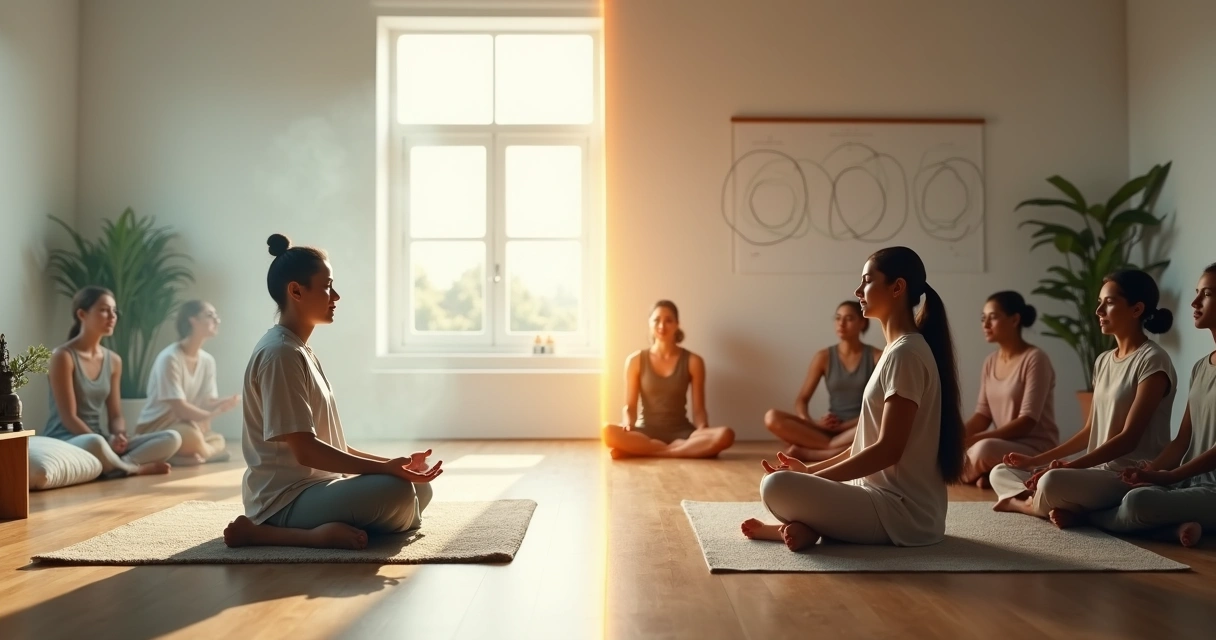
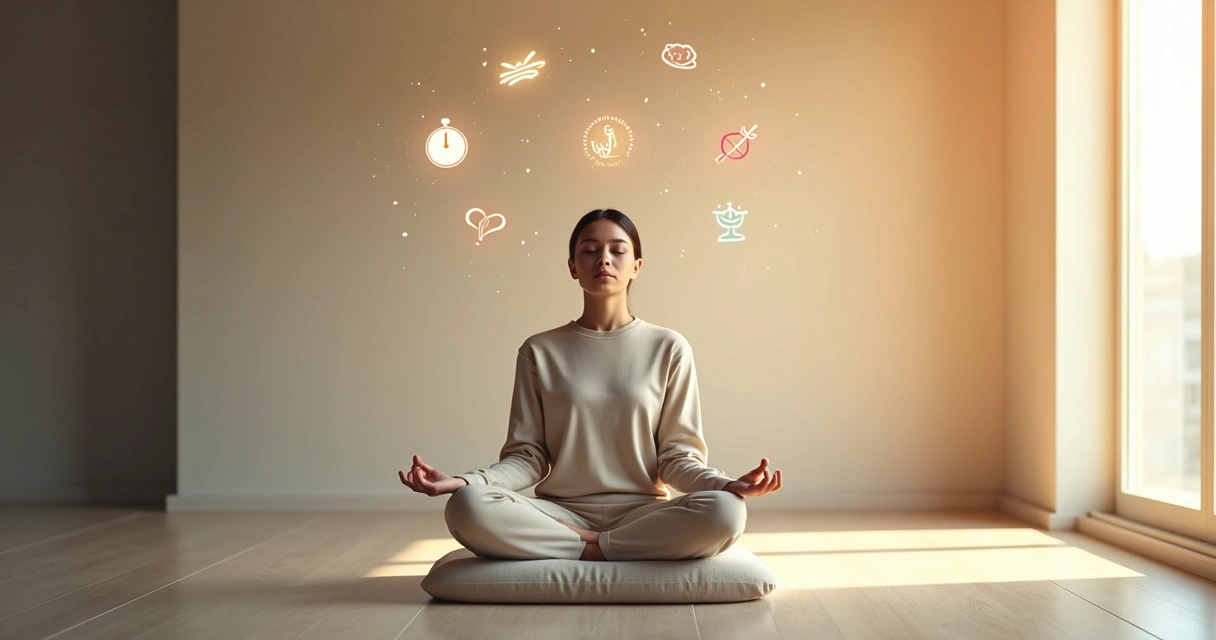
When we first think about meditation, many of us imagine a peaceful scene—someone sitting perfectly still in total silence, apparently untouched by thoughts or stress. But in our experience, these ideas can hold us back before we even begin. Meditation is not about perfection or pretending to be something we’re not. It’s about being present with what is happening inside us, even if that includes noise, restlessness, or a busy mind.
We often hear from individuals who want to try meditation but feel discouraged by what they think it requires. Over time, countless myths about meditation have taken root, shaping expectations and making people feel that they’re “not doing it right” or aren’t “the meditating type.” We see these myths as barriers to personal growth, inner peace, and authentic self-understanding.
Misconceptions can keep us from real change.
Let’s look closely at seven common meditation myths. By understanding and letting go of these limiting beliefs, we open the door to genuine growth and a new way of relating to our minds, our emotions, and the world around us.
Myth 1: Meditation means emptying the mind
This myth can discourage many beginners. We have met people who sit and immediately feel they have failed because thoughts run across their minds.
The mind is always active, making thoughts natural during meditation. It is not about forcing all thoughts away.
Instead, meditation is about observing thoughts and letting them pass, without getting carried by them. Some days are noisier than others. Noticing this, without judgment, is already a big step.
Myth 2: Meditation is only for spiritual or religious people
Some imagine meditation is tied only to religious or spiritual practices. We have seen that while meditation appears in many traditions, it can be practiced by anyone, regardless of beliefs.
Meditation is a skill that helps train attention, awareness, and self-understanding, available to anyone. No particular worldview or set of beliefs is required.
People meditate for all kinds of reasons, from focusing better at work, to making decisions, to managing stress, or simply learning to relate differently to their emotions.
Myth 3: Meditation must be done in complete silence
Many believe you need total silence to meditate. In reality, life is rarely silent. Cars pass by, phones ring, neighbors move around.

We find that the sounds around us can become part of the meditation itself. Rather than seeing them as problems, we can treat them as objects of awareness—something to notice, then return to the breath or body.
You do not need total silence or a special place to meditate; any environment can become a place for practice.
Myth 4: Meditation instantly makes you calm
Many people start meditating because they want to feel instant relief from anxiety, anger, or sadness. While meditation often brings more calm over time, it doesn’t always feel peaceful right away.
Sometimes, sitting quietly brings uncomfortable feelings to the surface. Far from being a sign of failure, this can be an opportunity to meet these emotions with curiosity and compassion, rather than pushing them away.
Meditation is a process, not a quick fix.
Over time, regular practice helps us relate to our inner experiences with more stability. But as we often remind ourselves, stillness is not about never feeling discomfort—it’s about holding space for everything that arises.
Myth 5: You need lots of time to meditate
A common reason people give for not starting meditation is the belief that practice must last for an hour or more. In our experience, even a few minutes count.
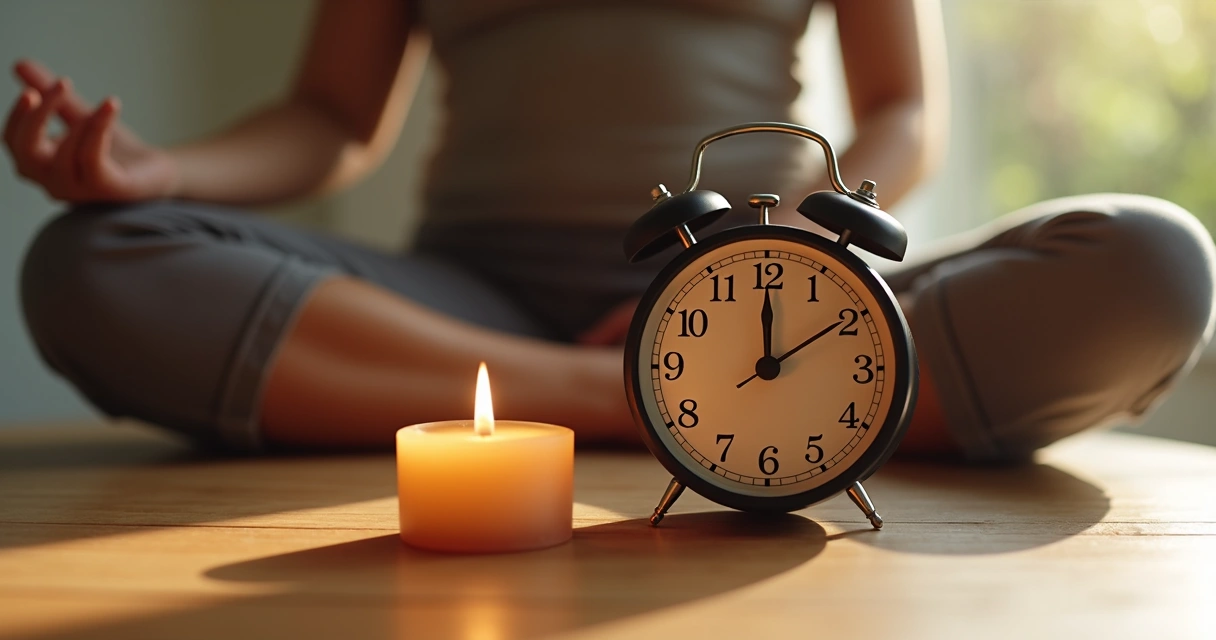
Even a single minute of focused attention can make a difference. You can meditate during a break at work, on the bus, or just before sleep.
The key is consistency, not length. Building a habit over time—no matter how short—has much more effect than long, rare sessions.
Myth 6: If you’re feeling restless, you can’t meditate
Restlessness is common. Sometimes, the mind doesn’t want to settle. The body might ache or twitch. We have seen that these moments often give us the best insights.
Meditation is not about achieving perfect stillness or total control over your mind. Instead, it is about discovering how we respond to discomfort.
On restless days, we focus on accepting the agitation and just being present with it for a few breaths. This builds resilience, patience, and a different relationship with our energy.
Myth 7: Progress in meditation always feels positive
Many expect that as they grow in meditation, every session will feel better than the last. But actually, progress in meditation can feel unpredictable.
Some days feel peaceful; others feel chaotic or emotional. Growth is often subtle. We notice it in the way we respond to daily stress, relate to others, or make decisions.
It is normal for meditation to bring up difficult memories or feelings. Rather than seeking only positive experiences, we suggest welcoming whatever arises. Progress is not measured by bliss, but by depth and honesty.
How meditation myths block real growth
Why do these myths matter? Because they cause frustration and disappointment. People feel that they are doing it “wrong,” or that meditation is reserved for others. Instead, we believe real growth comes from letting go of these false expectations and discovering the freedom to practice in your own way.
We draw on our experience to say that:
- Meditation is unique for each person.
- There is no single right way to sit, breathe, or focus.
- Growth looks different every day and for every individual.
For those curious to look deeper into this journey, we suggest learning more about different meditation approaches and their effects, exploring how consciousness transforms experience, or understanding how integration relates to emotional maturity. You may also want to see the relationship between self-awareness and leadership growth. For more insights on inner reconciliation, we invite you to check the wisdom our team shares regularly.
Conclusion
We have seen how myths about meditation can keep people away from this helpful practice. By meeting these myths with clarity, we can leave behind unrealistic standards and discover a practice that fits real life—one that works with busy minds, noisy rooms, and restless energy. True growth begins when we let meditation be an honest meeting with ourselves, just as we are.
Frequently asked questions
What is meditation and how to start?
Meditation is the practice of bringing attention to the present moment with openness and curiosity, usually by focusing on the breath, body sensations, or sounds. To start, find a comfortable position, close your eyes if you wish, and notice your breathing. When your mind wanders, gently bring your attention back. Begin with a few minutes and gradually increase as you feel comfortable.
Do I need to clear my mind?
No, you do not need to clear your mind completely. Thoughts naturally arise during meditation, and the goal is not to stop them but to relate to them without being carried away. Simply notice when you get lost in thought and gently return to your focus.
Is meditation only for spiritual people?
Meditation is open to everyone, regardless of beliefs. Many people meditate for reasons such as reducing stress, improving focus, or understanding their emotions—none of which require any spiritual or religious views.
How long should I meditate daily?
There’s no fixed rule for how long you should meditate. Even a few minutes daily can be helpful. Consistency matters more than sitting for a long time. Start small, and allow your practice to evolve with your needs.
Can I meditate if I am restless?
Yes, you can meditate even when you feel restless. Restlessness can be part of the meditation experience and does not mean you are failing. Try to accept the feeling, bring attention to it, and notice how it changes over time. This can even increase your patience and self-understanding.