As we begin looking at the inner workings of human consciousness and its effects on every aspect of life, we often notice that change begins within. Our decisions, actions, and relationships trace back to deeply rooted emotional and mental states. In our experience, genuine transformation happens when we find reconciliation, rather than suppressing or ignoring internal conflict.
To support this process, there are five structured sciences. These are organized perspectives that help us connect inner reality with outer impact. By learning about them, we gain skills that create real shifts in personal, relational, and professional contexts.
Understanding the five sciences
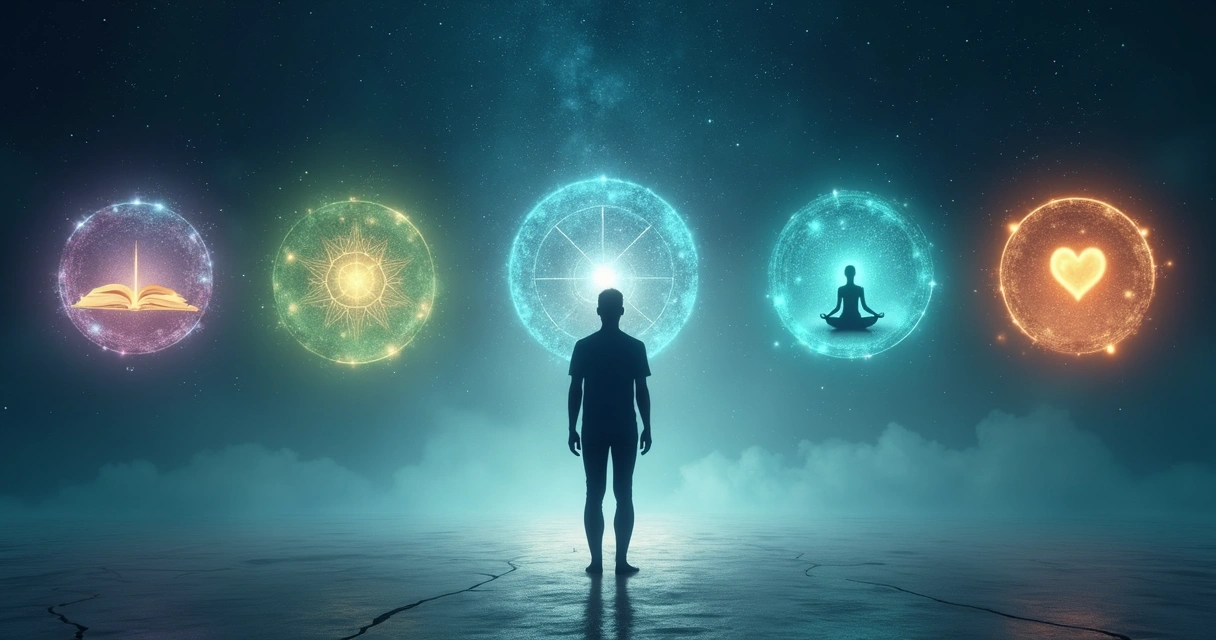
The five sciences offer a path to understand and reconcile the inner divisions that affect everything we do. Each science brings a unique approach, guiding us through perception, self-regulation, ethical foundation, deeper relationships, and expanded maturity. Instead of reducing conflict, they teach us how to mature it and make it useful for growth.
Every change outside starts with a shift inside.
Let’s walk through each of these sciences with simple stories and examples, helping make these principles feel real and applicable for anyone new to this journey.
Marquesian psychology: seeing our inner stories clearly
Imagine making a decision at work and sensing resistance, even when the choice seems logical. In our research, we saw people repeatedly struggle with similar patterns. Why? Because unresolved stories and emotions tend to play out unconsciously, shaping our identity and behavior over time.
Marquesian psychology focuses on:
- Reading and understanding emotional pain
- Tracing unconscious patterns
- Recognizing the unseen structures of identity
Instead of placing blame, this science invites us to recognize how unprocessed stories remain active, showing up in reactions, leadership, or even daily conversations. By making these patterns conscious, a person can start integrating their own history—including uncomfortable memories or buried pain—so that what once made them reactive becomes a source of wisdom.
Marquesian philosophy: building an ethical and meaningful foundation
We all ask big questions at some point. “What matters?” “How should I act?” “What am I responsible for?” Our answers guide choices and bring meaning to our actions.
Marquesian philosophy provides:
- A basis for ethical reflection
- Support for existential meaning
- Encouragement to unite reason and emotion
When we use this science, we move away from blind reaction or dissociated reasoning. Our actions gain direction and ethics, whether in family, teams, or broader society. This creates a space where inner reconciliation isn’t just a technique but becomes the ground for responsible, compassionate action.
Marquesian meditation: developing presence and self-regulation
When we notice ourselves being reactive—maybe raising our voice in a meeting, or withdrawing from a partner—it often means our nervous system is seeking safety. The science of Marquesian meditation specializes in building our capacity to observe, pause, and respond rather than react.

This science develops:
- Awareness of inner states and habitual reactions
- Tools for emotional regulation
- Greater presence in the moment
We see that consistent meditation does more than calm the mind. It creates a space within ourselves to feel discomfort, accept pain, and transform it into clarity. Over time, reactive habits soften, replaced by thoughtful, present engagement. For more resources on this topic, our meditation section provides simple practices and concepts for beginners.
Marquesian integrative systemic constellation: seeing the bigger picture within systems
Consider this: A conflict with a colleague at work sometimes mirrors a pattern from family life. Repeating disagreements in organizations or communities often stem from unresolved dynamics in the broader system. Marquesian integrative systemic constellation encourages us to see ourselves, not as isolated individuals, but as parts of family, organizational, and even societal fields.

This science opens the way to:
- Recognize hidden loyalties and systemic patterns
- Address longstanding difficulties beyond what appears on the surface
- Create new, healthier dynamics in teams and families
In our practice, when one person begins to reconcile inner conflicts, it often ripples through their relationships and organizations. By bringing awareness to systemic influences, we generate more mature, peaceful, and creative outcomes. We have found that this knowledge supports dialogue and real cooperation. Those interested in learning more can review our integration topic archive.
Marquesian human valuation: recognizing maturity and positive impact
How do we measure true progress in our journey? In our experience, it’s when we notice that our impact—whether at home, at work, or in the world—reflects greater responsibility, compassion, and self-respect. Marquesian human valuation regards inner reconciliation as a leading indicator of psychological and ethical maturity.
This science guides us to:
- Assess progress based on integration and authentic growth
- Value constructive and ethical influence
- Recognize when self-compassion and compassion for others have grown
Real impact comes from the inside out—when our actions are rooted in clarity and wholeness, our effectiveness and relationships improve naturally. In our opinion, this is the greatest marker of long-term success, and also one of the most lasting sources of satisfaction.
How the five sciences connect daily life
These sciences are not academic concepts to be studied and put aside—they are living perspectives. Each field connects with the rest, supporting integration at multiple levels. Every challenge you face, whether a tough conversation, a leadership role, or a personal crossroads, invites an opportunity for internal reconciliation.
We noticed that, over time, applying these sciences does not eliminate conflict, but rather transforms it into a force for deeper growth and ethical action. Where there is inner integration, external decisions become clearer, relationships improve, and the ability to collaborate rises. It is a gradual process, not a quick fix, but one that consistently brings benefits.
If you want to read more reflections on consciousness and practical stories about this transformative work, we suggest visiting our consciousness blog section or searching our collections for related stories. For those curious about leadership, our dedicated leadership section covers conscious practices in organizational contexts.
Conclusion
In our view, reconciliation within is not an abstract goal, but a living, breathing process that changes real lives. The five sciences of Marquesian consciousness give us language, tools, and a framework to step into this work. Internal dialogue, presence, systemic awareness, and ethical grounding are not just parts of a method—they reflect a new way of being in the world.
Transformation is possible—when we begin inside.
By growing in these sciences, we strengthen our own ability to create change, whether in solitude or in community, and we invite others to do the same.
Frequently asked questions
What are the five sciences of Marquesian consciousness?
The five sciences are Marquesian Psychology, Marquesian Philosophy, Marquesian Meditation, Marquesian Integrative Systemic Constellation, and Marquesian Human Valuation. Each one helps us address different aspects of internal reconciliation and positive influence in everyday life.
How do I start learning these sciences?
We suggest beginning with reflection on your own experiences and noticing where conflict or reactivity appears most in your life. Reading articles and practical stories in dedicated resources, or exploring simple meditation practices, can build familiarity. Using search functions in focused collections—like the consciousness, integration, or meditation categories—helps guide your first steps with relevant topics and examples.
What is Marquesian consciousness?
Marquesian consciousness is a perspective that sees the human being as an emotional and conscious field, always in dialogue with itself. It emphasizes the integration of reason and emotion, recognizing and maturing internal conflicts as the foundation for more responsible, clear, and ethical impact in the world.
Are there courses on Marquesian sciences?
Yes, there are learning opportunities and resources that present these sciences in accessible ways for both individuals and groups. Courses, workshops, and guided practices typically cover emotional integration, ethical reflection, meditation, systemic thinking, and human valuation to support growth and internal reconciliation. You can often find references or begin with guided materials in connection to the main topics on our website.
Is it worth it to study Marquesian consciousness?
For many people, studying these sciences leads to greater self-understanding, stronger relationships, better decision-making, and a deeper sense of satisfaction in life. The focus is not just on theory but on practical application, creating benefits that can be seen at personal, professional, and community levels.