Family healing can sometimes feel like a distant hope, especially when patterns seem fixed and old wounds still echo in our daily lives. We have seen that systemic constellation exercises, when approached with commitment and openness, can move the field of families in ways that logic alone cannot explain. These exercises can unlock hidden dynamics, reveal unspoken loyalties, and offer a path to relational peace.
Understanding the systemic approach
At its heart, the systemic constellation method views each person as part of a larger field. Every family member, past or present, influences this field. Patterns such as exclusion, guilt, or unresolved loss can persist for generations. The method does not look for blame but for inclusion, balance, and order.
In our experience, what is hidden in a family can become visible through a constellation exercise, often with surprising clarity. When we facilitate these exercises, our intention is to allow space for truths to emerge and transformations to happen naturally.
Preparing for advanced exercises
Before engaging with advanced systemic constellation exercises, it is important for participants to carry a level of self-awareness and readiness. Working deeply with family dynamics can stir emotions and memories. We encourage a gentle approach—with moments of reflection, and, if possible, preparation through meditation practices that foster inner presence.
Participants may want to reflect on the following:
- What relationships in their family still feel unresolved?
- Are there patterns that repeat across generations?
- Do any events or people remain unspoken or excluded?
These questions begin to open the internal field, preparing it for the work ahead.
Advanced exercise 1: Representing the family system through movement
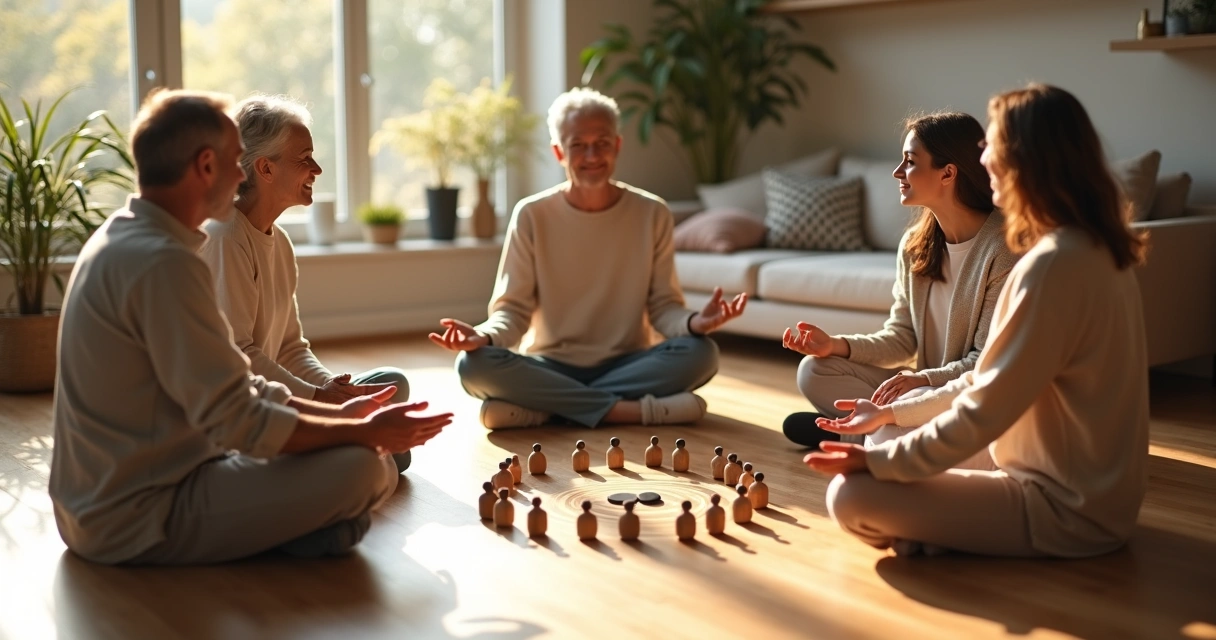
A foundational step in advanced systemic exercises is giving the system a “living presence.” In this movement-based approach, participants stand in a physical space representing key family members (living or deceased, close or distant). If working alone, objects or pieces of paper can stand in for people.
Instructions:
- Choose 4 to 6 significant family members. Place representatives (people or objects) in the space according to what feels right—distance, direction, and grouping are all meaningful.
- Stand in each position for a moment and notice feelings, thoughts, or body sensations.
- After each position, return to your own place and take a breath before moving to the next.
- Pay special attention to excluded members—see how the arrangement changes when their presence is acknowledged.
This movement can help us sense family loyalties or hidden tensions with deep simplicity. It is not about analysis, but about allowing the body to feel what the mind cannot see.

Advanced exercise 2: Dialogue between generations
Sometimes a conversation, even imagined, can create healing across time. In this exercise, representatives for parents, grandparents, or even earlier ancestors speak or move on behalf of their roles. The facilitator encourages short, simple phrases such as “I see you,” “You belong,” or “Please forgive me.”
We have noticed that when these phrases are spoken with sincerity, something softens in the group. This exercise can reveal generational burdens and allow new sentences to replace old silence.
Here is a suggested structure:
- Identify an unresolved relationship with a parent, grandparent, or ancestor.
- Set up representatives, asking them to tune in to the field and speak only what feels true in the moment.
- Encourage both sides to listen to each other. Allow for silence—often more healing than words.
- End with gestures of respect, such as a bow or eye contact, if it feels right.
Sometimes, a single sentence or a silent bow can restore lost dignity or reconnect broken ties.
Advanced exercise 3: Uncovering family secrets
Every family has stories that are kept in the shadows. These secrets often carry emotional weight, influencing descendants in ways that may not be obvious. Advanced constellation work allows these stories to come into the light gently, always respecting privacy and trauma boundaries.
In our practice, we usually set up the exercise with care:
- Acknowledge that there may be secrets (such as lost children, hidden relationships, migrations, or trauma).
- Represent the “secret” itself as a person or symbol in the field.
- Allow the secret to “speak” or to be seen, without seeking details or explanations.
- Observe the reactions of other representatives—there is often immediate change once the secret is included.
What is hidden seeks to be seen.
Bringing a secret into the field can free living family members from entanglements that do not belong to them.
Advanced exercise 4: Working with unfinished grief
Grief that has not been expressed or processed can linger in a family system for years. It often manifests as sadness, anxiety, or recurring setbacks—outward signs that attention is needed. An advanced exercise for unfinished grief honors those who have been lost or left behind.
The steps are as follows:
- Identify the person or event connected to the grief.
- Place a representative for the one who is grieving, and one for what was lost (a person, a homeland, a potential life).
- Encourage the grieving representative to express, with words or posture, what has never been spoken—statements like “I miss you” or “I wished things were different” can open blocked emotions.
- Support is offered by silent witnesses or other representatives simply being present.
- Allow time for the process to unfold, without rushing for a resolution. Slow presence can be the best medicine.
Including and witnessing grief allows new energy to enter the family field.
After the exercise: Integration and reflection
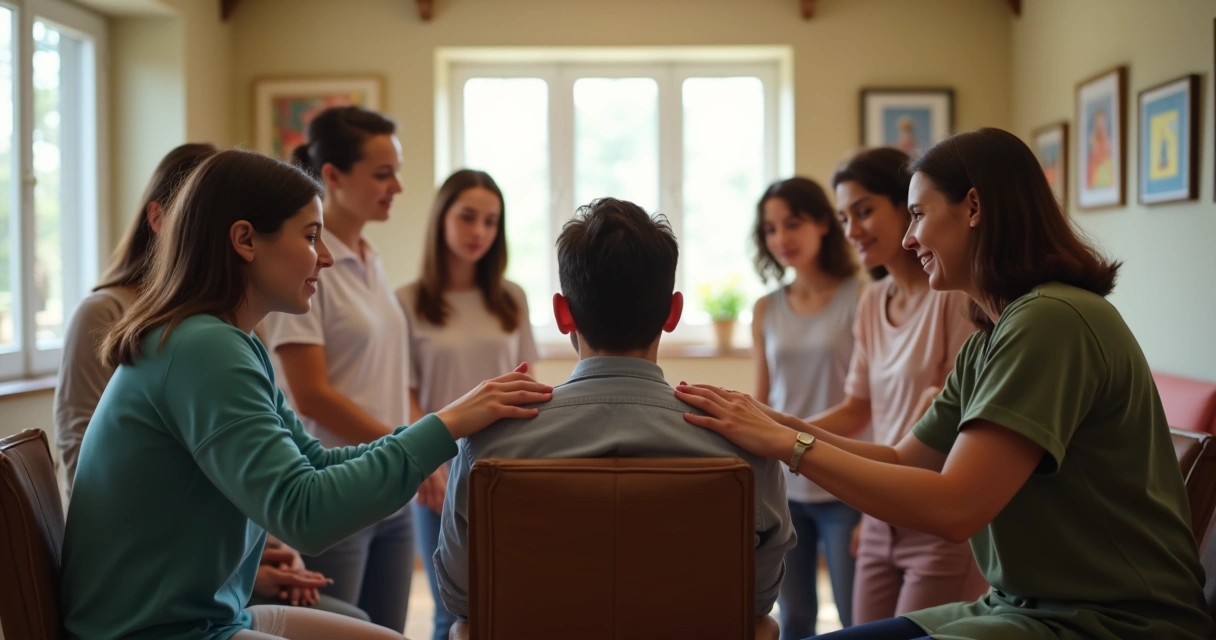
What happens after an advanced constellation exercise is just as meaningful as the exercise itself. Old emotions may rise, and new insights can appear for days or weeks. We suggest participants take time for reflection, journaling, or quiet walks in nature to let changes settle.
It is also helpful to seek out resources or spaces focused on consciousness or integration as these themes support the ongoing process. Sometimes, sharing with others on a similar path, such as those interested in relationships, can offer additional comfort.
The integration phase reminds us that deep shifts in the family field take time and gentle attention.
What we have learned from advanced exercises
Through years of practice, we have witnessed the power of systemic constellation exercises to reveal, release, and heal. The advanced forms described here are not tools to be used lightly, but pathways for real transformation when entered with humility and respect.
We believe that healing within families is possible when what is hidden becomes visible, and what was separate is invited to return. This process does not require perfection, only willingness and care.
For those who wish to go further, learning from facilitators and reading experiences—such as those shared by our own team—can bring new understanding. Ultimately, family constellations teach us how connected we truly are, not just to one another, but to all those who came before us.
Frequently asked questions
What is a systemic constellation exercise?
A systemic constellation exercise is a guided process where people represent family members, relationships, or themes in order to reveal hidden dynamics affecting the group. This method helps individuals see the invisible patterns in their families, often bringing clarity without long discussions or therapy sessions.
How do family constellation exercises work?
In a typical exercise, participants stand in a space or use objects to represent different family members or issues. Everyone is guided to tune in to their roles, expressing movements, positions, or phrases that feel honest. This reveals the unspoken links and patterns in the family field. As what is hidden becomes visible and relationships are acknowledged, shifts toward healing can begin.
Are constellation exercises effective for healing?
Many people report a lightness or new understanding after a constellation exercise, and there is growing anecdotal evidence of its benefits. While not a substitute for therapy, systemic constellations have been used worldwide for supporting resolution in family, relationship, and even organizational challenges.
How much do advanced exercises cost?
The price of advanced constellation exercises varies widely depending on the facilitator, location, and format (private or group). Some facilitators offer sessions on a donation basis, while others charge hourly or per workshop. It is best to contact professional practitioners for current rates and to discuss expectations in advance.
Where can I join a constellation workshop?
Constellation workshops are offered in many cities, as well as online. We recommend seeking out trained facilitators who create a safe, welcoming environment. To learn more about consciousness and integration in a broader sense, you can also visit sites and resources dedicated to such topics, such as specialized blogs and community groups.