

Communities do not break all at once. In our experience, they weaken in silence first. A family feud spreads into a neighborhood. An old loss is never named. A public conflict keeps returning, even after meetings, plans, and promises. People say they want peace, yet something hidden keeps pulling the group back into tension.
This is where systemic constellations can help. They offer a way to see what is often felt but not clearly spoken. Instead of treating conflict as a single event, we look at the web around it: loyalties, exclusions, grief, blame, and the places where people no longer feel seen.
Systemic constellations for community reconciliation help groups reveal hidden patterns that keep conflict alive.
We think this matters because many community problems are not only about policy or personality. They are also about memory, belonging, and unresolved pain. When those layers are ignored, solutions stay weak. When they are given space, a different kind of movement can begin.
Why community conflict often repeats
We have seen a common pattern. A group tries to solve a conflict by discussing facts alone. Facts matter, of course. But facts do not always settle what people carry inside. A mother who lost a son, a leader who feels blamed for an old decision, a family that was pushed out years ago, all of this stays active in the field of the community.
What is not faced often returns.
In systemic work, we pay attention to the wider structure around the conflict. We ask simple but deep questions:
Who feels excluded from the story?
What loss has never been honored?
Which groups carry shame, anger, or fear?
Where do people repeat roles from the past?
This does not replace dialogue, mediation, or social action. It adds another layer. We can better understand collective tension when we include both visible events and hidden emotional ties. If you want broader reflections on inner and collective patterns, we often connect this theme with consciousness studies.
What systemic constellations bring to reconciliation
A community constellation creates a living map of relationships in a group. People or markers are placed to represent parts of the system, such as residents, leaders, victims, excluded groups, institutions, or even values like justice and belonging. As the positions shift, new insight can appear.
The goal is not to force agreement, but to reveal the deeper order needed for repair.
Sometimes the turning point is very human. We remember a small local gathering where tension had filled the room for months. People were polite. Too polite. During the constellation, it became clear that an earlier generation had been left out of every public retelling of the conflict. Once that exclusion was named, the room changed. Not because every issue was solved, but because truth had finally entered the process.
Systemic constellations can support reconciliation by helping communities:
Recognize who or what has been left out
Give place to grief without turning it into accusation
See repeating loyalties across families or groups
Reduce reactive blame and open shared responsibility
These shifts are not imaginary. Wider reconciliation work has shown real community effects. For example, a large community study in Burundi found that scalable reconciliation interventions increased intergroup trust and tolerance while reducing social distance and competitive victimhood. That tells us something simple and strong: communities can change when the right social conditions are created.
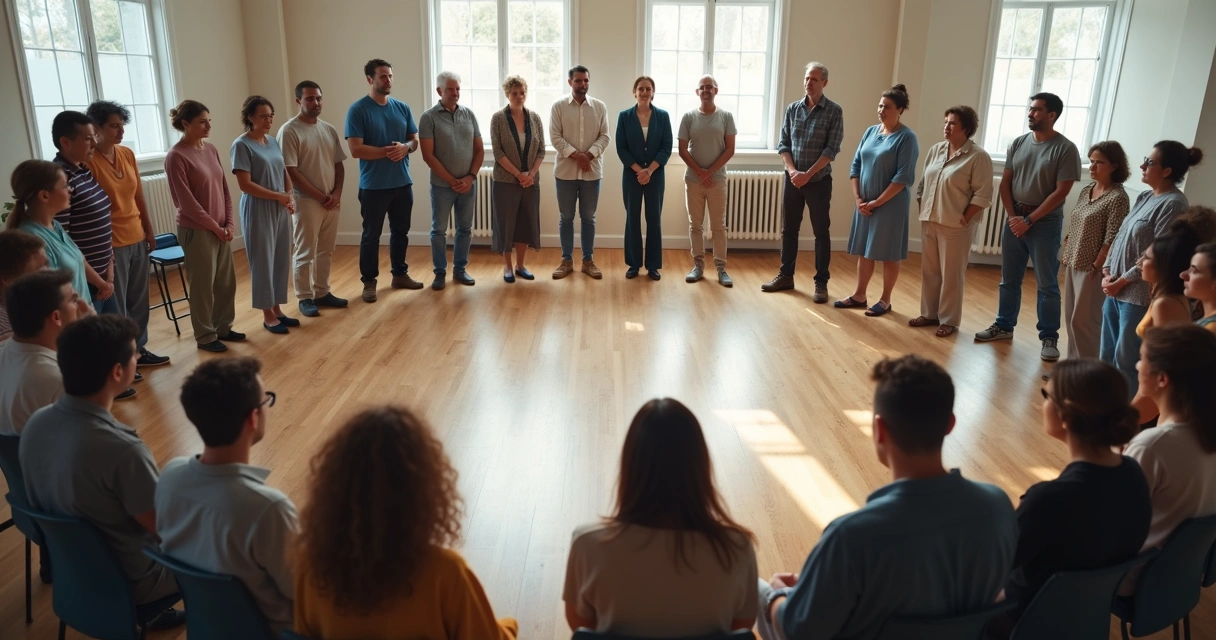
Steps for a community constellation process
In our view, reconciliation needs structure. If the process is too loose, people can feel exposed. If it is too rigid, truth may stay hidden. A community constellation usually moves through a sequence that protects the group while allowing insight.
Define the issue clearly. The group names the conflict or fracture in plain words.
Identify the system. We map who belongs to the issue, including absent or forgotten parties.
Set representation. People, objects, or floor markers are placed to show the current field.
Observe the dynamics. The facilitator notices distance, tension, direction, silence, and reactions.
Name exclusions and losses. Hidden grief, denied responsibility, or erased groups are acknowledged.
Test restoring movements. Small shifts in position, language, or recognition are introduced.
Close with integration. The group reflects on what was seen and what action now feels honest.
Each step has a purpose. We are not trying to create drama. We are trying to let the system speak in a form people can witness together. This often helps in areas linked to relationships, since many public tensions are carried through private bonds.
What makes the process safe and useful
Not every group is ready for this work. We say that with care. A constellation asks for emotional maturity, clear boundaries, and good guidance. Without that, participants may confuse symbolic insight with final truth. The process should stay grounded, respectful, and well held.
We suggest a few practical conditions for community use:
A trained facilitator with group experience
Clear consent from participants
A focused question, not a vague wish for harmony
Time for reflection after the session
Safety in systemic constellations comes from containment, consent, and careful interpretation.
We also think follow-up matters. A constellation may open understanding, but communities still need decisions, rituals, dialogue, and policy steps. Inner shifts and outer actions should support each other. This is especially true when leaders are involved. For that reason, we often relate these conversations to leadership practice and to the wider work of integration.
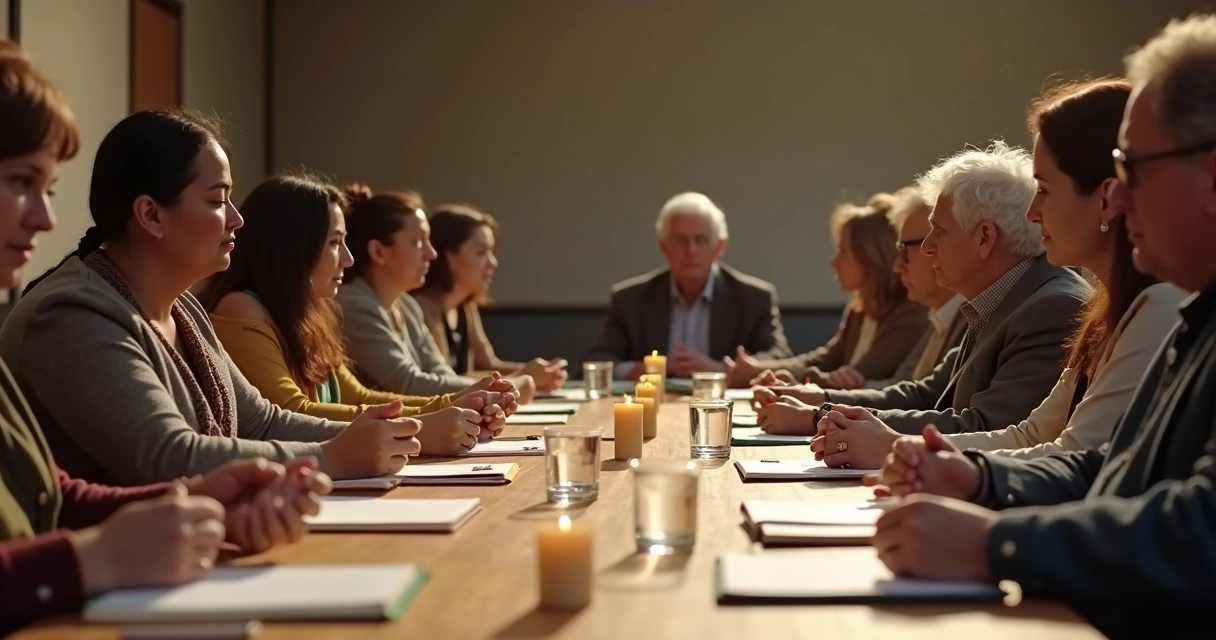
When to use community constellations
This approach can be helpful when a conflict keeps returning, when mistrust remains after formal talks, or when a community senses that the visible issue is not the whole story. It may also support transitions after leadership change, public loss, social division, or long periods of silence.
We would not treat it as a magic answer. Some situations need legal action, trauma care, public policy, or direct negotiation first. Yet there are moments when a group is stuck because it cannot see itself. In those moments, a constellation can act like a mirror.
If you are trying to locate themes, questions, or language for a specific issue, a practical starting point can be the site’s search resources.
Conclusion
Community reconciliation is rarely linear. It asks for patience, truth, and a willingness to see more than the surface of conflict. Systemic constellations can support that path by showing hidden loyalties, forgotten losses, and blocked forms of belonging.
We believe their value lies in making the invisible visible, in a way that a group can witness together. That does not erase pain. It does not remove accountability. But it can soften rigid blame and open a more honest place for repair.
Reconciliation begins when what was hidden can finally be seen.
Frequently asked questions
What are systemic constellations for reconciliation?
Systemic constellations for reconciliation are guided group processes that map the relationships, losses, and tensions inside a community conflict. They help people notice hidden patterns, exclusions, and emotional ties that may be keeping the conflict active.
How do systemic constellations work?
They work by representing parts of a system through people, objects, or spatial positions in a room. The facilitator observes how the arrangement reflects distance, pressure, loyalty, or absence. From there, the group can recognize what needs acknowledgment, repair, or a new place in the shared story.
Is it worth trying systemic constellations?
It can be worth trying when a community feels stuck and standard conversations are not changing the deeper pattern. We think the method is most helpful when it is led by a skilled facilitator, paired with follow-up action, and used with respect for the emotional weight of the issue.
What are the steps in a community constellation?
A community constellation often includes defining the issue, identifying everyone who belongs to the system, setting representatives or markers, observing the field, naming exclusions or losses, testing restoring movements, and closing with reflection and integration.
Where can I find trained facilitators?
You can look for trained facilitators through professional networks, community mental health circles, restorative practice groups, and local directories focused on systemic or group-based methods. We suggest checking training background, experience with communities, and how they handle safety, consent, and follow-up.